


The current context and urgency to transition
During the leadership session on digital sovereignty and the Vrije Cloud, Pieter van Boheemen (Post X Society) opened by outlining the broader context we are currently operating in. He emphasized the growing concentration of power among major technology companies. Big Tech corporations such as Nvidia, Apple, Meta, and Palantir collectively generate revenues that exceed those of the largest oil and pharmaceutical companies combined by several trillion dollars. This concentration of economic power translates into significant political influence and control over data and privacy.
Building on this, Amir Khan (Mangoteq) highlighted the implications of the U.S. Cloud Act, which obliges U.S.-based technology companies to provide data to the U.S. authorities upon request. This creates increasing urgency for organizations to reconsider their reliance on large U.S. tech providers in order to better safeguard sensitive data and uphold privacy standards.
De Vrije Cloud en manageable first steps
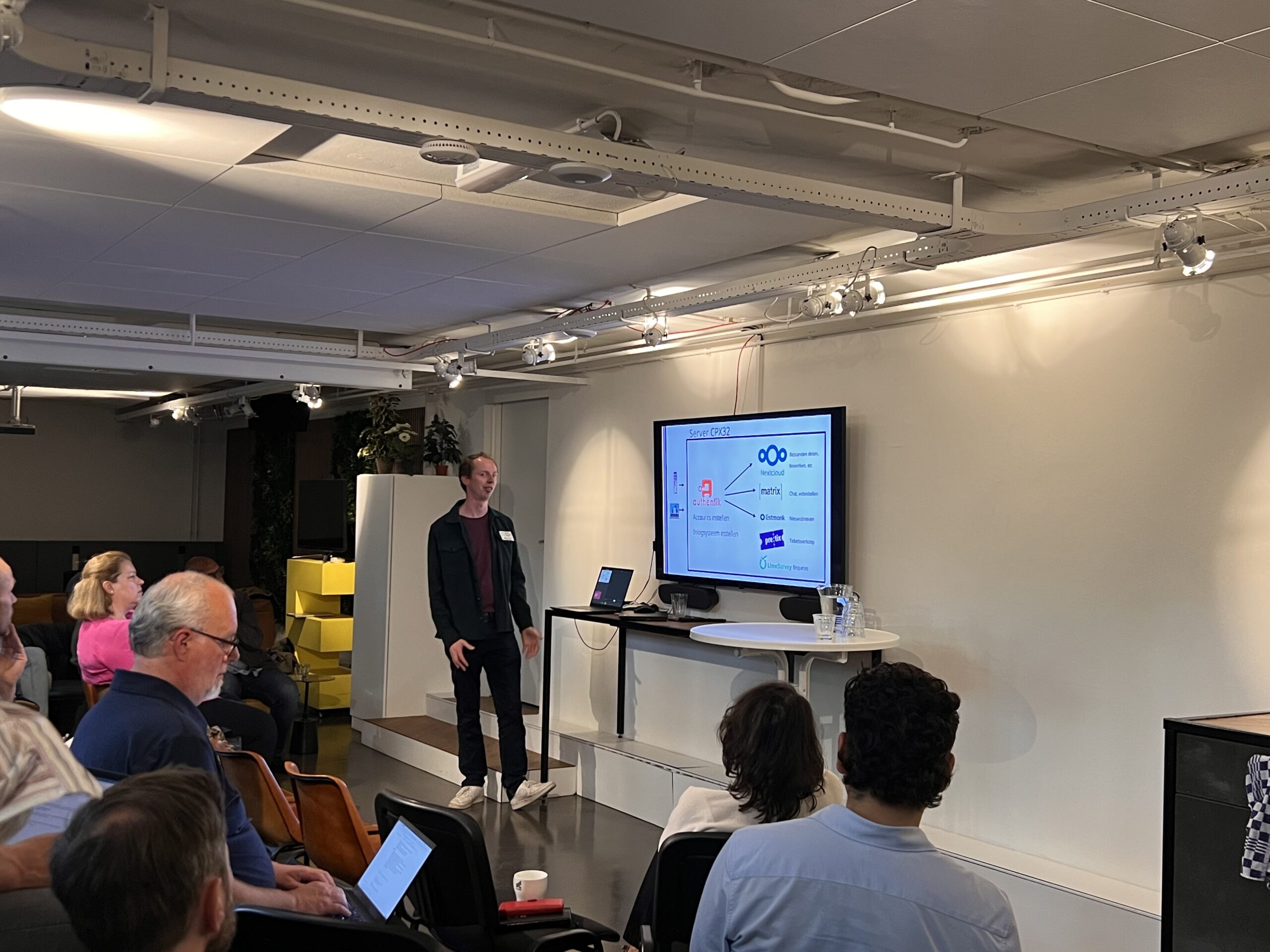
After presenting this context, Pieter invited organizations to join the Vrije Cloud initiative, a coalition designed specifically for non-profits seeking to transition away from Big Tech. The initiative aims to make this transition both accessible and achievable. It supports organizations in implementing alternative systems via tools such as Authentik for identity and access management, and promotes platforms like Nextcloud, Matrix, Listmonk, and PreTix.
Vrije Cloud also leverages a network of experts to identify and evaluate FLOSS (Free, Libre, and Open Source Software) solutions. These alternatives are further assessed based on several criteria: European origin, proven reliability, flexibility, usability, cost, sustainability, and the strength of their user communities. By pooling knowledge and sharing experiences, the coalition enables organizations to learn from one another and avoid starting their transition from scratch.
Amir also outlined practical first steps to make such a transition more manageable:
- Leadership is critical
Migration is less a technical challenge and more a matter of leadership, ownership, and prioritization. Without strong commitment at the top, transitions are likely to stall. - Start with strategy
Ensure that the move toward alternative technologies aligns with your organization’s values and mission. If transparency and privacy are core principles, your technology stack should reflect these. Additionally, while Big Tech may seem cost-effective initially, long-term vendor lock-in can make it more expensive. - Define your “why”
Clearly articulate the reasons for migrating and identify potential barriers within your organization. - Audit and assess first
Gain a clear overview: what data needs protection, what should be migrated (and when), what can be archived, and what can be discarded. External tools and experts can support this process. - Start small and test
Begin with a focused use case and run a pilot. Prove that alternatives work in practice. A phased or hybrid approach is often more realistic than a full migration at once.

Practical example of FPU
Finally, Remie Stronks shared the experience of Free Press Unlimited (FPU) in transitioning away from Big Tech. This has been a process the organisation has worked on since 2022. While this journey definitely involved challenges, particularly in terms of finding the right alternatives, user experiences and mindset shifts among new staff, it ultimately resulted in a digital infrastructure more aligned with the organization’s values, including digital independence, sovereignty, transparency, and trust.
For FPU, key benefits included greater transparency through open-source systems and improved auditability by digital security experts. Additionally, by hosting their data on servers located in the Netherlands, they are not subject to the U.S. Cloud Act, strengthening their control over data and privacy.
Conclusion and Call to Action
The session ended with a call from Pieter to join Post X Society in the Digital Justice Fund. Organisations can receive up to 50,000 euros to make a transition possible within their digital infrastructures. If you have any interest and/or would like to know more, contact Pieter: pieter@postxsociety.org
The 17th of September Partos will organise a practitioner’s session together with Post X Society. This will be a more hands-on workshop in which the first steps to move towards digital sovereignty will be initiated.