


Using Budget Monitoring to Reduce Child Malnutrition
In rural Bangladesh, families have long struggled to access basic nutrition and WASH (water, sanitation, and hygiene) services. Although local governments, known as Union Parishads, had public budgets in place, these were often poorly implemented, with little transparency or community involvement. Essential services remained out of reach for the most vulnerable.
Budget Monitoring for Accountability
To tackle this, the Right2Grow programme introduced a community-led approach called Budget Monitoring and Expenditure Tracking (BMET), CEGAA’s flagship method for effective budget advocacy. The goal: empower civil society and communities to understand and influence how public money is spent on priorities such as nutrition and WASH.
Right2Grow trained CSOs, community-based groups, media, and government officials in budget literacy, gender equity, and data use. Participants learned to analyse budgets, track spending, and compare it to what was promised—using that evidence to advocate for better services.
“BMET gives communities the tools to ask the right questions, and the evidence to push for real change. It turns budgets from something abstract into something people can understand, monitor, and influence.”
Silindile Shezi, Technical Advisor at CEGAA
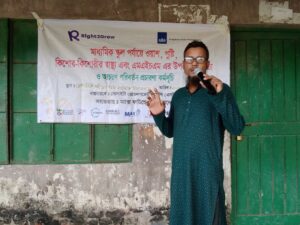
One local champion of this is Dr. Bashir Uddin Gharami, a doctor and community leader in Pyarpur. After attending Right2Grow training, he began organising community discussions, attending budget meetings, and advocating for improvements to child nutrition and WASH. “Before, no one really explained where the money went,” he shared. “Now we can ask questions and get answers.”
The Power of Partnership
This work was made possible through collaboration between Right2Grow partners. CEGAA provided technical tools and training, Save the Children and World Vision supported mobilisation and advocacy, while local organisations helped embed the approach into everyday civic engagement. As a consortium, they ensured knowledge and ownership remained with local actors, not just development professionals.
The impact has been significant. Across 40 Union Parishads in Bangladesh, Right2Grow’s work reached over 165,000 people. In 21 of those communities, annual local budgets for WASH and nutrition increased by an average of 2.6%. Families began receiving food supplements, pregnant women gained access to improved healthcare, and WASH services expanded into underserved areas.
”Before, no one really explained where the money went. Now we can ask questions and get answers.”
Dr. Bashir Uddin Gharami
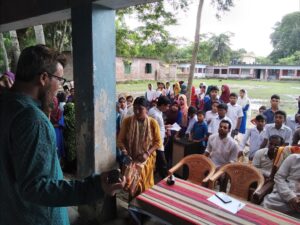
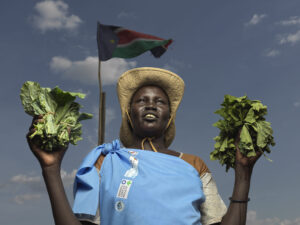
More importantly, power began to shift. For the first time, communities are being invited into the decision-making process. Open budget sessions now include community representatives like Dr. Gharami in Bangladesh, or Samuel Chor in South Sudan, who speak to officials about what families need, what the budget contains, and what action is required.
Scaling Impact Across Countries
This community-led budgeting model is showing results across all Right2Grow countries:
- In Burkina Faso, local governments doubled nutrition allocations from 2 to 4% following civil society advocacy.
- In Mali, civil society helped develop the first national budget brief on nutrition.
- In South Sudan, progress went beyond commitments: six recommendations from civil society were formally adopted into the national budget, and the Ministry of Finance invited Right2Grow partners to co-shape budget preparation. Even children were empowered—in 2025 they presented budget analysis in Parliament during the Day of the African Child, prompting the Speaker to pledge to protect nutrition and WASH allocations.
- In Uganda, 18 out of 26 evidence-based recommendations from civil society were adopted into the national budget.
- In Ethiopia, communities co-developed a nutrition plan with 11 government sectors, backed by budget allocations. Seven ministries also created a joint financial management system to improve planning and accountability.
Each outcome reflects a powerful shift: communities not only demanding better services, but helping design the policies, systems, and budgets that shape them.
Sustaining Change
To make sure these gains last, Right2Grow invested in long-term capacity building. Community leaders and civil society groups have assumed permanent roles in local and regional budget committees, such as the Upazila structures in Bangladesh and Regional Nutrition Councils in Ethiopia. Tools and skills from BMET are now embedded locally, so communities can continue monitoring after the programme ends.
Lessons to Share
The story from Bangladesh, and beyond, offers a few key takeaways:
- With the right tools and training, communities can hold governments accountable.
- Trust grows when there is transparency in decision-making and people see concrete changes in their lives—like clean water or food for their children.
- Shifting power to local actors makes solutions more sustainable, inclusive, and scalable.
By building skills, trust, and partnerships, Right2Grow helped transform local budgets from paper plans into real services, and turned passive recipients into active advocates for their own rights. Consequently, more children will grow up healthy, nourished, and with a better chance at a brighter future.
Do you want to read the full magazine? Click here for the full publication!