


Small Initiatives Lead to International Support for Improved Sexual and Reproductive Health and Rights
For the past five years, youth activists across nine African countries have been at the forefront of driving local advocacy initiatives to advance sexual and reproductive health and rights (SRHR) and gender equality. Their individual actions have evolved into concrete impact: shaping national policies, influencing African Union conventions, and engaging heads of state. These are their stories.
Margaret (23) — Kenya
Every day, Margaret witnesses the consequences of harmful practices on girls and young women. In her words: “Sexual and reproductive health and rights are not high on the agenda in Kenya”, she says. “It is not taken seriously. When a young woman visits a health centre and asks for contraception, the health workers condemn her. And there is a lot of inequality in our legal system as well. Young people who cross the line are punished severely, but when a major crime occurs, like rape, it’s covered up.
“That is why I have founded my own organization, Her Dignity Her Pride, which is committed to combating child marriage, female genital mutilation, teenage pregnancy, and sexual abuse in Kajiado. Many girls and women don’t know their rights, so it’s important to discuss this with them.”
Margaret says that her involvement with the Break Free! programme has provided her with the opportunity to work with other activists from across Africa. “It is a safe space where young people can voice their concerns about their sexual health and rights. Their experiences inspire me to continue to lobby for better legislation. Ultimately, I want young people to always have a seat at the table when it comes to decisions that concern them. So that decision-makers actually see the human being behind the problems.”

Helen (21) and the Youth Bakers — Zambia
Founded in 2022, the Youth Bakers began as a group of ten motivated young Zambians who wanted to translate (“bake”) key information about SRHR into local languages so that this could be easily understood.
Helen and her friends decided to form a group after attending training on SRHR as part of the Break Free! programme. They wanted to spread awareness about the dangers of child marriage and teenage pregnancy. To reach a larger audience, the group approached the local radio station. Since the station lacked any youth-programming of its own, despite the interest of its listeners, the Youth Bakers’ show became a big hit.
They have produced over 73 episodes so far and have a Facebook page where they post discussion topics to encourage young people to get more involved.
“Our radio show is entertainment with a serious message,” Helen says.
Their growing impact has not gone unnoticed. In 2024, the group expanded to 52 members—a milestone that enabled them to formally register as a youth-led organisation. This official status opened doors to funding opportunities, a critical step in sustaining their work. “Funding is a challenge because young people are usually not trusted,” says Helen. “But because of our unity, the government recognised us and gave us a grant.”
Helen’s voice now resonates far beyond the local studio.
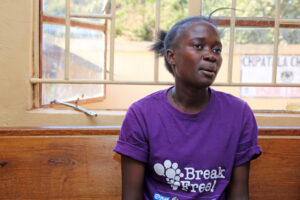
Peace (27) — Malawi
“Sex and relationships are not talked about, so young people don’t learn how to protect themselves. As a result, many girls in Malawi become pregnant. Their parents see no other option but to have their daughter marry the child’s father. And then she drops out of school.”
During a regional Break Free! youth meeting, Peace, a youth advocate from Malawi, speaks powerfully about the far-reaching consequences of the taboos around sex and relationships. For three days, youth advocates from different African countries gathered for training and exchange on political participation around the topic of sexual rights and health.
“In Malawi,” she says, “breaking the taboo starts with religious leaders in our community. If they recognize and speak out that something needs to change, chances are the rest of the community will follow. That’s why it’s hugely important to talk to them about girls’ rights in our country.”
The challenges Peace faces as a youth advocate are enormous, but there are highlights as well. “[In 2022] we were able to get more budget from the Ministry of Gender for our mission. This really shows that the ministry wants to engage with young people and listen to their concerns and plans. With this, we can really make a difference.”
