
When Make Way launched in 2021, civic space in Uganda was already shrinking. Matters worsened in 2023 with the introduction of the Anti-Homosexuality Act, which threatened the death penalty for same-sex relationships and criminalised support for LGBTQ+ rights. Implementing organisations were forced underground; some closed drop-in clinics and shifted to door-to-door services. People living with HIV faced treatment interruptions.
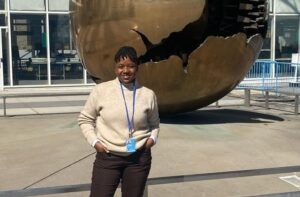
Hannah, a Make Way youth panel member in Uganda: “Young people are leading this work. We’ve learned that change is possible when we stand together. And we’re not going back.”
“People were scared,” recalls Hannah, a Make Way youth panel member in Uganda. “People perceived to be queer, lesbian, gay, or gender non-conforming were attacked in the street, lost jobs, were evicted from their homes and denied health services. People were afraid to visit clinics.”
Intersectional Approach
The Make Way programme adopts an intersectional approach to confronting barriers to SRHR, analysing how overlapping factors such as gender, disability, sexual orientation, HIV status, and poverty deepen exclusion. At first, this proved difficult to communicate. “There is no ready way to translate ‘intersectionality’ in local languages,” Hannah notes, “some duty-bearers confused it with ‘intersexuality’ or thought it was code for LGBTQ+.”
Advocates used the Sustainable Development Goals slogan “leave no one behind” as a neutral entry point. From there, they showed how layered vulnerabilities prevent people from accessing services, persuading duty-bearers that, unless policies adapt, some people will always be left behind.
Using Make Way’s Intersectional Toolkit and Community Scorecard, youth advocates in Uganda documented discrimination, such as health facilities denying contraception to young people with disabilities or refusing HIV treatment to LGBTQ+ youth. “The scorecard gave us facts to present to decision-makers,” Hannah explains. “We don’t mention LGBTQ+ directly, but by tackling health worker attitudes, everyone benefits.”
The Strength of Working in Partnership
While individual organisations faced risks for speaking out, collective action brought protection and reach. Youth leaders mobilised peers into discreet support networks. Public events gave way to safer, youth-led spaces; WhatsApp groups connected young people to SRHR information and emergency support. Consortium partners even pooled budgets to cover legal costs.
Akina Mama wa Afrika joined with other advocacy groups, supported financially by the Dutch government, and engaged allies in local government. Make Way partners worked behind closed doors, framing SRHR as a public health and human rights issue to avoid direct confrontation.
These efforts yielded concrete results. Youth advocates engaged district health officers, securing five dedicated youth corners in Kalangala health facilities. More than 60 healthcare providers completed workshops on values clarification and attitude transformation, reducing stigma against LGBTQ+ youth and youth with disabilities.
Changing Systems and Lives
Despite a hostile climate, Make Way achieved measurable results:
- Improved access: Over 3,000 young people in Kalangala district now use non-discriminatory SRHR services through youth corners.
- Policy change: District-level guidelines now require all health facilities to provide SRHR services without discrimination.
- Legal victory: Civil society coalitions, supported by Make Way’s international advocacy, helped the Constitutional Court strike down Anti-Homosexuality Act provisions that denied LGBTQ+ people healthcare access.
- Youth empowerment: 40+ young advocates trained in the intersectional toolkit now lead dialogues and influence policy.
“These changes aren’t just numbers. This means dignity—being able to walk into a clinic and be treated like everyone else.”
Sustainability and lessons learned
To ensure results endure:
- Institutionalised practices: Youth-friendly corners are embedded in district health plans and funded by local budgets.
- Youth networks: Consortium partners and implementing partners are forming a formal coalition.
- Partnerships: Links with allies provide long-term advocacy support.
Make Way Uganda has identified four key lessons:
1. Intersectionality drives impact.
Addressing overlapping vulnerabilities ensures no group is left behind and strengthens advocacy by highlighting systemic inequities.
2. Consortia multiply power and protection.
Working together reduces risk, maximises influence, and provides a safety net for advocates.
3. Work where change is possible.
In Uganda, engaging local officials proved more effective than navigating national political gridlock.
4. Strategic narrative framing matters.
When a topic is sensitive, you must be strategic in your language. Linking to policies and positions adopted at regional and international levels makes it easier to discuss sensitive topics locally.
“Young people are leading this work,” Hannah says proudly. “We’ve learned that change is possible when we stand together. And we’re not going back.”