


Breaking the Silence on Digital Abuse
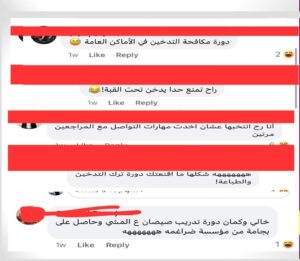
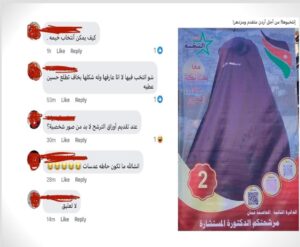
When 57-year-old parliamentary candidate Tamam Al Ma’akleh entered the 2024 elections, she was met with mockery. A recent graduate and mother, she bravely launched her online campaign with her modest CV, only to be attacked on social media.
“I cried, and my kids cried with me at the amount of ridicule I received on Facebook, but I continued with the support of my family and community”. – Tamam Al Ma’akleh
Her experience reflects a wider reality in Jordan; Technology-Facilitated Gender-Based Violence (TFGBV) is silencing women in civic and political life. Despite their growing roles as changemakers in their communities and politically, women face online abuse, harassment, and threats. This often leads to self-censorship, withdrawal, and sometimes, physical violence.
Generation G works towards gender-just and violence-free societies, online and offline. Digital spaces should drive harassment-free solutions, enabling young people in all their diversity to participate safely.
Elections Under Attack: Protecting Women’s Participation
Within Generation G’s Jordan coalition, the Solidarity Is Global Institute (SIGI) and its partner, the Jordanian National Forum for Women (JNFW), focused on women’s and youth participation in the run-up to the 2024 parliamentary elections. In collaboration with Jordan’s Independent Election Commission, SIGI trained 224 youth election monitors to observe campaigns and voting through a gender lens, while collecting data for SIGI’s study on online electoral violence.
SIGI’s study showed that women candidates were especially targeted, particularly on Facebook, Jordan’s most used platform. Cyberbullying and defamation spread rumours and lies to damage credibility, while mockery belittled women. Online violence reduces public trust and voter support, pushing women out of the race. Recommendations included updating laws, running awareness campaigns, and creating platforms where women candidates can respond to defamation and misinformation.
ARDD: Everyday Harassment and Digital Exclusion
Another Generation G partner, the Arab Renaissance for Democracy and Development (ARDD), complemented this work by focusing on everyday online harassment of women. Building on SIGI’s findings and Rutgers’ global research, ARDD launched its own national study. Through interviews, focus group discussions, and surveys with young women activists and experts, ARDD documented how harassment—most frequently on Facebook, followed by WhatsApp, Messenger, and Instagram—impacts women’s lives.
Just over one-third of respondents reported offline consequences such as stress, strained relationships, or public shaming. As one legal advocate reflected:
“The consequences for women are social and permanent. Even if the law intervenes, the damage is already done in her family and community“
Findings confirmed that online harassment is silencing women or pushing them out of digital civic spaces. “There is a multitude of examples where women were victims of casual misogyny, which is borderline hate speech, but gift-wrapped with ‘humour’ to seem harmless,” says Leen Masoud of ARDD. Harassment was not necessarily sexual, but often took the form of mockery, silencing, or aggressive criticism whenever they engaged in political discourse.
Alarmingly, over 77% of respondents to ARDD’s research did not report the abuse, due to a reported lack of knowledge, distrust in justice systems, fear of judgment, or because online harassment is dismissed as ‘not serious.’
From Silence to Agency: Women Taking Back Space
Through Generation G, SIGI and ARDD demonstrated the power of partnership. SIGI highlighted the critical moment of elections, while ARDD revealed the persistent digital harassment that steadily erodes women’s civic presence. Together, they built a comprehensive evidence base, which was presented in a groundbreaking roundtable with survivors, activists, youth, and government officials to validate findings and co-create recommendations.
For many women, this was the first time their online experiences were recognised as real threats to their rights and safety. Most importantly, women are reclaiming agency. One young activist told ARDD: “Little by little, my voice was being silenced. Now, I know I am not alone—and that this silence is part of the violence.”
“Little by little, my voice was being silenced. Now, I know I am not alone—and that this silence is part of the violence”.
“We Don’t Need More Awareness—We Need Protection”
Policy gaps remain: the updated cybercrime law (2023) still lacks gender-specific language and a clear definition of hate speech. Yet local organisations are increasingly stepping up. The Jordan Open-Source Association (JOSA) created “Nuha”, an open-source, AI-enabled tool to detect gender-based hate speech online, while a group of female journalists created “The Jordanian Network to Combat Digital Violence Against Female Journalists”.
The work of SIGI and ARDD has shifted Jordan’s conversation on TFGBV. Survivors’ voices and data now inform advocacy, legal aid, and recommendations for electoral integrity. Their efforts remind us of the words many women shared during the research: “We don’t need more awareness—we need protection”.