


How South Sudan’s Youth Rise as Leaders of Peace
Since gaining independence in 2011, South Sudan has faced near-constant instability. Years of civil war have left deep scars. While poverty and recurring famine continue to pose major challenges, the civil war in neighbouring Sudan has added an influx of refugees to this multi-layered crisis. In this fragile context, youth have no room to speak out on issues that affect them. But advocates like Yama and Oyella are slowly reclaiming their space.
Increasing Pressure on Women’s Rights
Instability and the persistence of unequal gender norms have long excluded women and girls from peacebuilding efforts in Sudan. The militarisation of society, lack of economic opportunities, and high levels of gender-based violence have severely impacted their mental health and social well-being. Children in general are denied civic spaces to express their vulnerability and needs in conflict. Despite these challenges to their safety, a new generation of advocates is standing up, determined to shape a more peaceful future.
”Of course everyone would like to live in a peaceful society, one not driven by hatred and violence. But the question is how to get there.” – Yama
Locally-Led Youth Advocacy for Peace
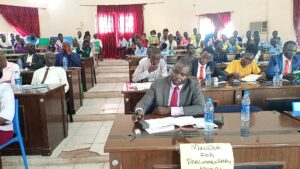
Through the Leaders of Peace programme, young people are encouraged to join Children and Young People’s Parliaments (CYPP) where they can speak out on issues that are important to them. These forums provide youth a stage to demonstrate their immense potential to influence policy and advocate for their rights. The youth advocates aspire to be actively included in the decision-making spaces—both local and national—that affect their lives. Their advocacy goes beyond just paperwork. Yama explains: “Of course everyone would like to live in a peaceful society, one not driven by hatred and violence. But the question is how to get there. [The programme] supports us to work out our ideas and produce our own projects for the participation of youth in decision-making and peace-building.”
From Advocates to CEOs of Their Own Youth-led Organisations
In addition to increasing the lobby and advocacy skills of the young people, Leaders of Peace supports them in initiating and running their own youth-led activities.
Yama became a member of the Children and Young People’s Parliament to build her self-confidence and communication skills. “Through participating in the Parliament, I’ve gained the confidence to speak with clarity and support initiatives that challenge gender norms. Leaders of Peace trained me on how to see myself as a leader capable of creating real change. I guess it worked, because I was then nominated as the co-founder of the youth-led CSO ‘Active Youth Engagement for Peace’,” Yama explains with pride.
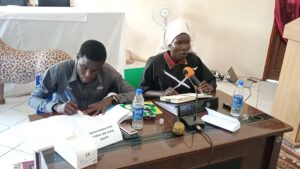
Similarly, Oyella started out as a medical student and became the first honourable speaker of the Parliament after signing up to speak out on substance abuse, a major issue among youth in South Sudan. She founded CSO Generation 711 in 2023. Their first action was to launch a campaign against illicit drugs and alcohol use among children in the country. The organisation also conducted research that created awareness of this pressing issue.
“Through participating in the Parliament, I’ve gained the confidence to speak with clarity and support initiatives that challenge gender norms.” —Yama, CEO of Active Youth Engagement for Peace
Concrete Results for Actionable Change
So far, more than 160 children have enrolled as CYPP members. These include both in-school children, and youth who had to drop out of school. Their efforts have already borne fruit. The creation of the two youth-led organisations, headed by Yama and Oyella, means that the youth advocates will have a solid foundation for lobby and advocacy long after the Leaders of Peace programme has run its course.
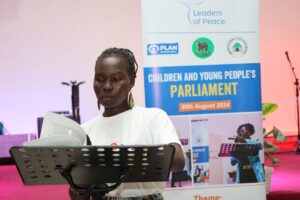
During the CYPP annual forums, the members have managed to pass four motions on key issues that affect the lives of South Sudanese children. And with success: the Office of the United Nations High Commissioner for Refugees responded to the motion on free access to national identity for youth and vulnerable individuals by setting up registration and issuing identity cards to these target groups. This will make a huge difference, helping previously disenfranchised youth to exercise their rights.