


Building Collaboration through the Community of Practice (CoP)
In Busia County, Kenya, youth, women, and other marginalised communities were long shut out of local decision-making. With limited access to governance spaces, and with few opportunities to build skills in advocacy and resource mobilisation, they were unable to participate in county planning and budgeting. This led to persistent gaps in essential services, such as healthcare and gender equity.
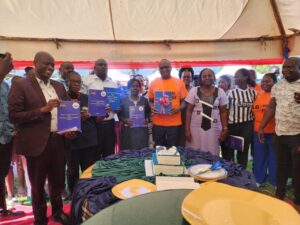
Supported by the Giving for Change programme and the Kenya Community Development Foundation (KCDF), a Community of Practice (CoP) was formed to address these challenges. The CoP, made up of grassroots civil society actors, provided training in budget analysis, advocacy, lobbying, and resource mobilisation. Local organisations analysed county budgets and policy documents, identifying gaps and consolidating findings into memoranda. Through “budget cafe” meetings, the CoP engaged communities in dialogue, empowering them to advocate for equitable resource allocation.

The initiative, led by KCDF and supported by the Giving for Change programme, was pivotal in fostering collaboration among local organisations, government officials, and community members. This partnership provided technical expertise, small grants, and platforms for dialogue, enabling the CoP to influence policy effectively. The collective effort ensured diverse voices were heard, amplifying the impact of advocacy campaigns and fostering trust between communities and the county government.
Achievements in Health, Gender, and Governance
In 2024, the CoP advocated for a 21% increase to the health-sector budget. Through a series of advocacy engagements, such as the budget cafe meetings, the CoP analysed the Busia County Budget estimates and engaged in public participation forums, advocating for increased health sector budget allocation through a memorandum. As a result, health-sector funding rose by KSh 519,148,282—from KSh 2.43 billion in 2024/2025 to KSh 2.95 billion in 2025/2026. The allocation addresses health gaps in the county, such as immunisation, reproductive health, and nutrition, all of which lay below the national average.
The CoP organisations also collectively contributed towards the development and implementation of the “Busia County Sexual and Gender-Based Violence Policy 2023”. Through continued advocacy, the county allocated Ksh 5,000,000 to finalise and launch the policy and an additional Ksh 1 million for Affirmative Action Development and Management. These results demonstrate the county’s responsiveness to the CoP efforts advancing United Nations Sustainable Development Goal 5 on gender equality.
A landmark achievement was the appointment of a CoP member to the Busia County Referral Hospital board, announced on 5 July 2024, institutionalising citizen representation in health governance. The county also established a Department of Strategic Partnerships to enhance collaboration and service delivery. With small grants, civil society actors reviewed nine key county policies, secured renovations for markets and dispensaries, and facilitated tax amnesty for 500 community members. Six youth champions secured public procurement contracts, demonstrating economic empowerment through sustained advocacy.
Sustaining Change and Lessons Learned
By embedding citizen participation in governance structures, such as the hospital board appointment and the Department of Strategic Partnerships, the CoP helped ensure sustainability. Training programmes equipped local organisations with skills to continue advocacy independently. The CoP also established community-led monitoring mechanisms to track budget implementation, ensuring accountability.
The success in Busia County shows the power of capacity-building and strong partnerships. Several key lessons stand out: investing in grassroots training on budget analysis and advocacy helps communities lead change; structured platforms like budget cafés support inclusive dialogue; formalising citizen roles in governance strengthens sustainability; and even small grants can lead to major policy and economic shifts. These strategies can be replicated elsewhere by creating similar Communities of Practice, building on local partnerships, and prioritising community-led monitoring to sustain and scale the impact.