


In 2024, sex workers’ rights came under threat. A draft report by the United Nations (UN) Special Rapporteur on violence against women and girls framed sex work as inherently violent, conflating it with trafficking and exploitation, and ignoring the lived experience of sex workers themselves.
The language in the initial call for input sparked global concern among sex worker-led organisations and allies, who feared the report would reinforce harmful stigma, criminalisation, and violence. The social exclusion of sex workers is often exacerbated by factors such as gender identity, sexual orientation, and/or socioeconomic status, such as in the case of a migrant trans sex worker.
In response to this, sex worker representatives and supporters—including Count Me In! (CMI!)—mobilised to challenge this narrative and ensure the voices of sex workers were heard and their rights and dignity respected.
Voices of Resistance: Sex Workers Speak Truth to Power
I will continue to demand my rights as a sex worker, because I also deserve labour rights.
Together with the Global Network for Sex Work Projects (NSWP), we gathered input for the UN report from over 70 sex worker-led organisations, academia, networks, and platforms, compiling this in an inventory, which is still widely used today for advocacy and awareness-raising.
We also supported an international sex workers’ delegation to attend the Human Rights Council in Geneva, where the final report was presented. Despite being excluded from the report itself, sex workers made their voices heard. During the UN interactive dialogue, five of ten NGO statements were delivered by sex workers, with a record nine in total supporting their rights. The message rang clear: “This report is a violation against us”.
“This Special Rapporteur is totally ignoring our lives, our work,” one participant said. “There is importance in the term ‘sex worker’. It explicitly makes the connection with human and labour rights. It is an umbrella term that includes diverse sectors and is gender and sexuality inclusive. Do not erase our consent by talking about ‘prostituted women’.”
Carolina, a Colombian sex worker and mother, stated: “My work is as dignified as any other work. But we do endure undignified conditions because our work isn’t recognised. Not everyone wants to be a sex worker, but not everyone wants to be a secretary or do housekeeping either. Our decisions are valid too. I will continue to demand my rights as a sex worker, because I also deserve labour rights.”
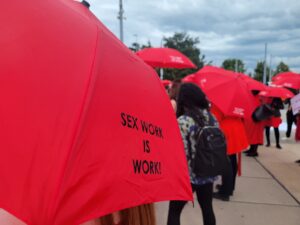
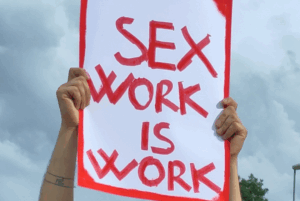
These voices echoed during both a side event and a protest at the Broken Chair outside the UN building.
From Protest to Power: Building Lasting Visibility and Legitimacy
We were also highly visible online around the report launch. In addition to participating in allies’ social media campaigns, we launched one of our own: Feminists for Sex Workers’ Rights. All eight CMI! organisations took part, contributing blogs and messages that extended beyond the HRC event. The campaign posts received more than 70,000 impressions on X (formerly Twitter) alone, increasing the reach of sex workers’ advocacy online.
Since CMI!’s work revolves around the most structurally excluded women and girls, with eliminating gender-based violence as a key focus, this intervention was perfectly aligned with CMI!’s mission and purpose. We used our collective strength, expertise, and global network to mobilise sex workers’ rights activists to a scale that cannot be ignored. While the final report didn’t reflect the voices of sex workers, our advocacy brought visibility and legitimacy to their demands within the UN and beyond.