


Beyond the Amazon: Reviving Bolivia’s Chiquitania Forest and Waterways
The Chiquitania forest is a unique tropical dry forest ecosystem in the lowlands of Santa Cruz, Bolivia, where deforestation, industrial agriculture, and water scarcity are increasingly intertwined. Once rich in biodiversity and a lifeline for Indigenous peoples and local communities, the region has become a frontline for environmental justice.
Cattle ranching and large-scale soy and maize cultivation have rapidly expanded, driven by international markets and extractive land-use models. The shift has not only stripped forests but also impacted communities’ water security. As global demand fuels commodity production, local populations face intensifying water insecurity, particularly in dry areas where rainfall is erratic and rivers are scarce.
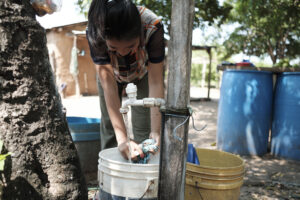
The Chiquitania’s dry forest depends on forest cover to regulate its hydrological cycle. Forests absorb rainwater, sustain groundwater recharge, and release moisture back into the air, stabilising local climates. When forests are cleared for pasture or monocultures, these natural systems unravel. Each cow in the region consumes up to 80 litres of water daily, prompting cattle ranchers to build artificial ponds (atajados), which intensifies competition for already scarce water sources.
Law of Mother Earth
This tension came to a head in 2024, when the Buena Vista community filed a lawsuit against an Argentinian rancher who had diverted the San Lorenzo River. The diversion, caused by an illegal dam, had devastating consequences: the community lost access to water for over four years, including a total cut-off for four consecutive months. This affected not just household needs but also agriculture, the community’s main livelihood.
In November 2024, Bolivia’s Agro-Environmental Court responded with a landmark ruling. Citing the country’s Law of Mother Earth, constitutional environmental rights, and the Escazú Agreement, the court ordered the dam’s removal and restoration of the river within ten business days. The ruling set a powerful precedent: that communities can use legal systems to reclaim environmental and Indigenous rights, even against influential extractive actors.
This Success was Possible by a Strong Network of Partnerships
The Green Livelihoods Alliance (GLA) has been active in the Chiquitania for nearly a decade. With IUCN NL at the helm, the alliance provided financial, technical, and strategic support to local partner PROBIOMA, which worked directly with affected communities. PROBIOMA played a central role in the San Lorenzo case by offering legal assistance, gathering evidence, and helping the community navigate the judicial process.
IUCN NL’s role extended beyond funding. It helped link local struggles to international mechanisms such as the Universal Periodic Review and the Convention on the Elimination of All Forms of Discrimination against Women; raised awareness on water justice and forest loss; and connected grassroots actors with research institutions and policy dialogues. This ecosystem of collaboration was essential not only for winning the case, but also for building long-term support in communities’ abilities to defend their rights.
A Far-reaching Impact
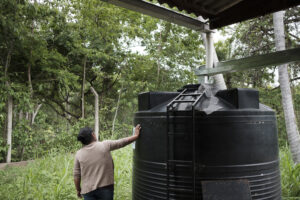
The outcome has had a far-reaching impact. Buena Vista regained access to its water source, allowing families to resume farming and daily life. The legal precedent offers opportunities for other communities facing similar threats. It has also sparked national dialogue on the water footprint of commodity production, with growing calls for policymakers to align deforestation-free supply chains with water justice. Maintaining the river’s natural flow has helped restore a healthy ecosystem, supporting biodiversity and strengthening environmental resilience.
To ensure sustainability, the GLA emphasised capacity-building at the community level and legal empowerment, rather than temporary aid. Community leaders were trained in environmental law and water governance, enabling them to engage in future disputes from a position of strength. By investing in local resilience, the project’s benefits are designed to outlast external funding.
Key Lessons
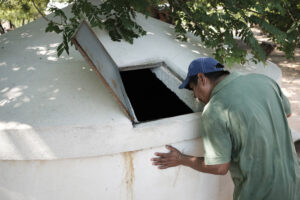
Several key lessons emerged from this experience. First, environmental justice requires legal pathways that are accessible and grounded in local realities. Second, partnerships between local actors and international allies can level the playing field against powerful corporate interests. Third, integrating environmental and human rights frameworks can provide robust legal grounds for defending water and forest systems.
The Chiquitania story is one of resilience and solidarity. It shows how coordinated, community-based advocacy can turn the tide against unsustainable land use. As climate stress intensifies and demand for commodities grows, safeguarding water for people instead of for production must become a global priority. The tools and alliances forged in Bolivia offer a replicable path forward for others facing similar challenges around the world.