


Highlights of the Partnerships
The Partnerships have led to a lot of highlights and achievements. Juliet shared that through partnerships, they have been able to rebuild the lives of women and girls in crisis in Sudan. Strategies and approaches have been made to build agency for girls to rise from the ashes. Girls are influencing policies and laws, in Ghana and Sierra Leone. Young people are building structures to be powerful.
Alexander expressed that they were able to stand up for workers’ rights in legislation and business policies. Empowering and capacitating trade unions, opening doors at top government and business levels for workers to be heard. He also spoke about one of the biggest issues, the power imbalance. As a consortium of trade unions, grassroots organisations and multistakeholder initiatives, they spanned all stakeholders including business. However, solving the power imbalance on system level change is difficult. You need to work together and get unheard voices at the table where it matters.
Alice shared about community engagement. That we must make sure that we leave behind a community that is empowered, that can speak up. They had been working very closely with communities and were able to empower people to speak with officials, to monitor the services, and to participate in the local government planning and budgeting processes. It is very critical to be empowered, that when we move on, they will stay.
Peter Derrek acknowledges the success of partnership and in the meantime the increase in local leadership, if communities are in the lead, we see that change becomes both legitimate and lasting.
Importance of governance
Through the panel, it became clear that governance is important in establishing fruitful partnerships. In this, it is essential to know where and for whom the change is needed. People need to be in the places where decisions are being made. Structures should be set up to make sure that local partners are part of steering committees. Again, the importance of trust is highlighted.
Alexander gave a shout out to the Ministry of Foreign Affairs for the way they handled these partnerships. He said that they never felt the Ministry wanted them to do something their way. He added that shifting power is important, but that we need each other. A lot of problems are caused here, in the global north, change also needs to happen here. As NGOs, we need to make space here for those voices; we need to do both: local leadership and systems change.
Springboard for future work
To make sure that these partnerships are a springboard for future work, sustainability is needed. Alice shared that they left structures that can last, that are supposed to continue. They made sure that the gaps are bridged. Scale up is also needed.
Systems change takes time. That makes the current funding gap between the two subsidy cycles counterproductive as Alexander mentioned. Fortunately, lots of things have been permanently placed with STITCH. The strategy behind Strategic Partnerships is reflected by that.
Juliet shared that there is now an amplified voice that cannot be stopped and cannot be ignored. The young people cannot be stopped. That already is sustainable, she said. Peter Derrek also mentioned that he saw a lot of power and ideas in the partnerships, among the young. Those voices are present, and they are strong.
Partnerships worked
A shared opinion in this panel is that the partnerships worked. Juliet mentioned that there is value in these partnerships; they have brought together people from different backgrounds but with the same interest and strengthened joint advocacy at national, regional and global levels. We can go together instead of alone. Alice agreed; she said that the Power of Voices worked. It has been tested and it works. It is time for us to speak out the positive, not only the negative, and to not lose hope at this moment. Alexander also acknowledged that the partnerships worked. He also mentioned that for society to support this kind of work, societal support is needed. Connecting all these partnerships to an agenda that people understand. Peter Derrek said that over time, these partnerships have evolved. What began as relationships focused on implementation have grown into genuine, strategic collaborations — built on trust, shared values, and a common vision for a more just and sustainable world. And this commitment will continue. Because we believe — firmly — that a strong, independent, and vibrant civil society is essential for real progress. It’s what keeps international cooperation grounded, innovative, and, above all, human.
Concluding
The panellists all agreed that the Strategic Partnerships worked and that they were very important. They led to concrete results. Exactly by bringing together different types of organisations they were able to drive policy and systems’ change by putting the voices and perspectives of local communities on the table.
The panellists also expressed worry that this funding is ending now, that development cooperation is under pressure worldwide and will be more used in self-interest. It is important to have clarity about the direction we are taking. The positive note is that a lot of what was started in the past 5 years will not stop now that the funding ends: the structures are there. People now know they can speak up and change policies; they will not stop.

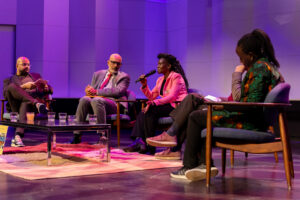
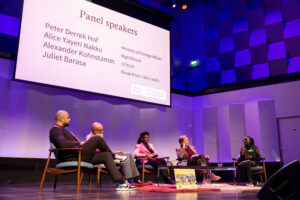
Pictures by Nina Akollo