

According to figures from the CBF, over 4 million Dutch people support development organisations. Together, they donate hundreds of millions of euros each year, thereby contributing to poverty reduction, education, healthcare, food security, humanitarian aid, and climate solutions. In addition, there are around 48,000 volunteers active in development cooperation. This combination of giving and acting has formed the basis of many initiatives for decades.
Stories that strike a chord
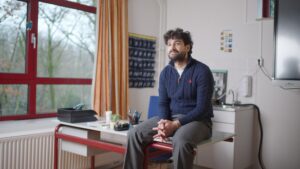
For Amena Rohja, her commitment stemmed from a personal motivation. As a student with a background in Afghanistan, she knows just how profound the impact of conflict and inequality can be. As a youth ambassador for World Vision, she is committed to raising awareness of this reality in different ways, including through discussions with policymakers and at meetings. Bahaa Aldeen Dabbagh does something similar. He visits schools and talks about his experiences as a refugee. For many pupils, it is the first time they have heard a personal account of war and displacement. It suddenly makes abstract themes very real.
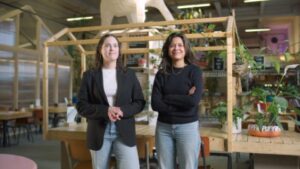
At the other end of the spectrum are initiatives such as the ‘Night of the Tip’. Students Puck van Heeswijk and Elena de Swart are involved with the organisation Wilde Ganzen. What began as a local idea has grown into an annual student campaign in which hospitality businesses throughout the Netherlands donate their tips to educational projects worldwide.
Involvement in various forms
Volunteering in the field of development cooperation does not follow a fixed pattern. Entrepreneurs, students, pensioners, and professionals contribute in very different ways.
For example, there are entrepreneurs such as Ireen Maarse and Larissa van der Velden, who are involved in a leadership programme for women in India through The Hunger Project. They not only support the project financially, but also maintain a personal connection with the women taking part.
Another example is Karen Timmer, who has been committed to Amref Health Africa for many years. She organises events, brings people together and raises funds for health projects in Africa. Her dedication was ultimately recognised with a Royal Honour.
Some forms of commitment, however, are very visible. For example, Matthias Jagersma ran 420 kilometres from Groningen to Limburg in eight days to raise money for Dorcas projects in Yemen. His charity run raised 6,000 euros.
Matthias himself lived in Yemen for many years and knows from experience just how great the need is for food, water, and safety. He didn’t run alone during his journey: a team of family and friends helped with food, transport, and support. It shows that even an individual initiative is always supported by others.
At the same time, a great deal of work takes place behind the scenes. In charity shops run by organisations such as Woord en Daad, volunteers work daily on recycling and social projects. The proceeds support projects worldwide, whilst the work itself takes place locally.
Connection between worlds
Some volunteers literally bridge two worlds. Abubakarr Bangura, founder of the Sierra Leone Youth Initiative, grew up in Sierra Leone and now lives in the Netherlands. Through his organisation, he works to promote self-reliance in his homeland and to raise awareness amongst young people here.

This shows that international cooperation is not just about ‘here’ and ‘there’, but about the people who connect those worlds. That connection is also at play within education. Volunteers such as Frits Mutsaers have been committed to the Liliane Fonds for many years. He gives guest lectures, shares stories, and helps donors understand what happens in practice. As he himself says: “Volunteering gives me the feeling that I can make a difference to someone else. That brings satisfaction, but also new insights. It broadens your horizons.”
Also at the international level, volunteering takes various forms. In Zambia, Augustine, a volunteer with the Liliane Fonds partner organisation Twatasha, cycles through villages in search of children with disabilities who are being kept hidden. Thanks to his efforts, dozens of children have already received care and support. His work stems from personal experience with his grandson, who has cerebral palsy. As a result, he knows just how great the impact of stigma is, but also how important it is for someone to take action.
A movement of many
When you look at all these stories side by side, what emerges is not a disjointed collection but a pattern: volunteering is everywhere. Local groups organise initiatives for children’s rights. Young people launch campaigns through activist labs. Trade unions are working together internationally to improve working conditions. And through sports programmes run by organisations such as the KNVB, coaches are being trained who in turn pass on their knowledge. These are different forms of engagement, but they have one thing in common: they only exist because people get involved.
What endures
Volunteering is rarely about a single person or a single moment. It is the sum of small contributions from many people: time, attention, and commitment. In the Netherlands, this is evident in major campaigns, but also in countless local initiatives which bring about significant change together. It is this collective effort that ensures the work can continue. Not because everything runs smoothly, but because people keep getting involved.
This comes together in the practice of development cooperation. Development organisations work worldwide with local partners who know the local context and challenges the best. Volunteers contribute to this from the Netherlands with their time and commitment. This creates a network of engagement that contributes to sustainable change worldwide.