

From the outset of the Strengthening Civil Courage programme, local ownership was intended as a cross-cutting pillar. In Africa’s Sahel region, this vision was put into practice, initiated by the partner AINL, through a year-long pilot, designed to share the leadership with national partners.
The Approach
The goal was simple but transformative: give the partners in the Sahel more agency and equity in programme governance. To make this possible, a national advisory committee of partners and alliance members was set up, and three key guidelines were established:
- Proper representation of organisations led by women and youth
-
A full planning and reporting cycle to test the approach
-
An agreement that partners would adapt their strategy, monitoring, and evaluation processes to the pilot
At the request of the partners in the Sahel, the pilot created two new structures:
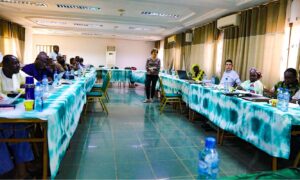
- The ‘Consultative Group’ (or groupe élargi) consisted of decision-makers from the ten local partners and the three alliance partners. During the pilot, they met online quarterly and once in-person to address strategic matters and were led by a director of one of the national partners.
- The ‘Technical Secretariat’, made up of the three alliance partners and three national partners, met bi-monthly to discuss operational matters, such as planning, monitoring, and evaluation.
The Results
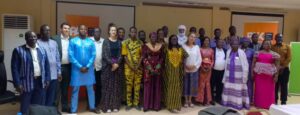
The pilot’s change in leadership significantly reshaped the programme. The Consultative Group shifted strategic focus to the right to education (AINL partners) and developing gender policies (all partners). By meeting in person in Burkina Faso in January 2024, trust, networks, and collaboration improved. Inclusion meant that discussions became more rooted in local realities, with perspectives and expertise shared where it mattered most.
The results? Genuine influence with better relevance: partners now feel they are in the driver’s seat, steering toward objectives that reflect their priorities.
Regular monitoring has ensured projects remain grounded in the local context. Collaboration, sharing experiences, and consensus-based decision-making have created a supportive and inclusive network that strengthens cultural and professional ties. Partners feel like they’re working together, rather than in silos. The Consultative Group and Technical Secretariat played crucial roles in streamlining decision-making and coordination, while preparation for meetings improved alignment and mutual understanding between participants. There’s still room for fine-tuning—especially in defining responsibilities—but this shift has already encouraged more joint planning, monitoring, and networking. Finally, this transformation has strengthened the programme’s sustainability by engaging a diverse range of actors and adapting to the realities of Sahelian context, even among regional instabilities.
Key Learnings
The pilot emphasised a key lesson: include all partners strategically from day one. This ensures a shared vision, trust, and legitimacy, encouraging key actors in the region to get on board. By tackling power dynamics early, national partners get a real seat at the table, and don’t wind up in solely implementation roles. This sets the foundation for sustainability: local actors are more likely to champion outcomes they helped design. Finally, this allows for strategic alignment of funding, capacity, and responsibilities with local priorities.
In short, local ownership must begin at the strategic level and at the design of a programme. Delaying this risks reinforcing power imbalances, mistrust, and undermining commitment. When power is shared meaningfully, and from the start, programmes become more relevant and resilient.