


“AFLN was born from the conviction that we could no longer ignore the urgent need to transform family law from a source of harm into a foundation for equality.”
– Hala Alkarib, Regional Director of SIHANetwork
Across Africa, the family remains one of the most legally unprotected and politically overlooked arenas for women and girls. Outdated, often colonial-era laws continue to deny them equal rights in marriage, divorce, inheritance, child custody, and protection from harmful practices like early marriage and female genital mutilation. These laws entrench inequality, fuelling cycles of discrimination and violence that span generations.
In 2020, a consortium of women’s rights organisations from East Africa and the Horn of Africa came together to launch We Cannot Wait (WCW), a project grounded in the lived realities of women and communities across the region.
“The Africa Family Law Network, beyond a legal-reform advocacy platform, is a model of how strategic partnerships, built on complementarity and shared values, can shift power, spark hope, and transform injustice into action.”
– Samah Hadid, Global Executive Director, Musawah
We Cannot Wait recognises that advancing women’s social and economic rights is essential to dismantling the structural barriers to equality. Through cross-regional learning and collective action, the consortium addresses the deep-rooted drivers of gender discrimination and exclusion. Although the status of women and girls various by location, there is a common thread: weak or missing legislation, poor enforcement, and the persistent influence of religious and cultural norms undermine equality. This is particularly visible in family law, where inequality is entrenched, and where reform is both a key goal and a measure of WCW’s commitment to change.
The Birth of the Africa Family Law Network
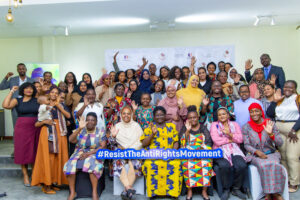
On 5 October 2022, over 60 feminist legal advocates from 23 African countries gathered in Nairobi for a landmark three-day conference. The outcome was the birth of a bold, continent-wide feminist movement: the Africa Family Law Network (AFLN). Created to challenge outdated and discriminatory family laws, the AFLN aims to bridge the gap between legal reform and lived reality, and to connect national and regional efforts to deliver justice for women and girls across the Greater Horn of Africa.
This initiative was spearheaded by SIHA Network and Musawah, two WCW partners, and shaped by the longstanding advocacy of Equality Now and the African Women’s Development and Communications Network (FEMNET), two organisations that have helped transform family law from a tool of oppression into a vehicle for equality.
Building Bridges, Shifting Power
At the heart of AFLN lies a powerful principle: complementarity in partnership. Founding members, SIHA Network, Musawah, Equality Now, and FEMNET each bring distinct but mutually reinforcing strengths: regional grassroots mobilisation, Islamic feminist legal expertise, international legal advocacy, and Pan-African movement-building. Rather than working in silos, they operate in solidarity, forming a unified platform to drive equitable family law reform across the continent.
Collective Action, Concrete Impact
In just 18 months, AFLN has brought the conversation around family law reform to strategic policy fora, such as the United Nations Commission on the Status of Women and the African Commission on Human and Peoples’ Rights.
It has also mobilised regional consultations, legal briefings, and grassroots campaigns in challenging contexts like Somalia, Sudan, and South Sudan. Members have engaged in strategic litigation in Uganda, Somalia, and Ethiopia, defending women facing family-based abuse and challenging unjust laws in court. Research into family laws and bills have in South Sudan, Somalia, and Djibouti is strengthening the case for regional reform.
At the same time, AFLN has led ratification missions across the continent, urging governments to use the Maputo Protocol to tackle fundamental inequalities within family systems. By linking survivors of sexual and gender-based violence with paralegals and progressive cultural and religious leaders, they are co-creating localised, feminist strategies. These collaborations are propelling the emergence of feminist legal clinics, court monitoring initiatives, and succession rights campaigns.

Toward Sustainability and Scalability
Currently, AFLN is prioritising:
- Legal documentation sharing through knowledge products such as training manuals, research reports, and paper briefs
- Intergenerational mentorship between seasoned feminist lawyers and young practitioners
- Legal analysis of family laws and bills in South Sudan, Somalia, and Djibouti to guide reform efforts
- Resource mobilisation for country-specific campaigns, particularly in politically fragile contexts
- Engagements with progressive religious and cultural leaders to promote interpretations of religion and culture that advance gender equality and justice.