


At first, I didn’t think I could change anything. Now I know I can.
– Safiya
In the dry, dusty stretches of Borno State in northern Nigeria, Maiduguri was once full of the sounds of children playing in schoolyards and families browsing evening markets. But for years, this rhythm has been broken by violent Boko Haram insurgents and armed bandits. Thousands have been killed, homes destroyed, and entire communities uprooted. Among those forced to flee were two young girls, Adama Ali and Safiya Mustapha, who are now 16 and living in the Wassa Internally Displaced Persons Camp on the outskirts of Abuja.
Displacement had vast consequences for these girls, who were pulled out of school for over four years. There was a good chance they would need to marry young. In a place where humanitarian aid struggles to meet basic needs, sexual and reproductive health and rights (SRHR) are seldom prioritised. Yet, it was through SRHR education that Adama and Safiya began to reclaim their futures.
They first heard about the Stand With A Girl (SWAG) Initiative in 2022 through friends who had attended a community sensitisation. With parental consent, the girls enrolled in SWAG’s Safe Spaces programme for six months of literacy, numeracy, and SRHR learning. They also followed short courses and sensitisations, held twice quarterly in different zones of the camp.
I see the gaps in my community. And I know I have a role to play in bringing the change we deserve.
– Adama
For Safiya, the idea of leadership was as foreign as the notion of bodily autonomy. “In my community, only men are leaders,” she recalls. “When they said I could be a leader, it sounded strange. I had never seen a girl in charge before.” Through Safe Spaces, she learned about her body, her rights, and how to encourage her peers to start conversations that mattered. It wasn’t always easy. Talking about menstruation or delaying marriage was taboo. Yet, over time, she found her voice and began teaching other girls the very lessons that had transformed her own thinking.
“Now I want to finish secondary school before getting married,” Safiya says. “I can make my own decisions about my life.”
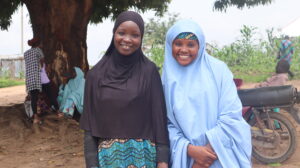
Adama’s path to leadership began with a bold step: meeting with the commissioner of the National Commission for Refugees, Migrants, and Internally Displaced Persons to demand better infrastructure and learning materials for the camp’s primary school. “I had always wanted to be in school,” she says, “but after we fled Maiduguri when I was 10, it felt impossible. Living in the camp for six years made me think things could never get better. But when I saw young people learning through the We Lead program, I joined, just to gain knowledge. Then my whole mindset changed.”
Enrolled in Kabusa Senior Secondary School through SWAG’s education project, Adama learned about her body, menstruation, and childbirth—knowledge her parents had lacked. She became a source of information for friends, explaining, “I have two close friends who can’t join the sessions. They’re already married and couldn’t get consent from their husbands to be part of the programme. But they’re always eager for me to teach them.”
Her advocacy does not stop there. Adama speaks passionately about the urgent need for lighting in the camp to curb nighttime violence, and for well-equipped health facilities so that “women stop dying after childbirth.”
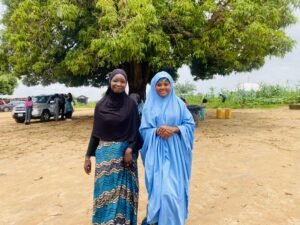
Together, Adama and Safiya are recognized as youth ambassadors in their community, challenging harmful norms and inspiring change. Their confidence has brought them to national platforms, standing on stage at Nigeria’s first National Internally Displaced Persons Conference to speak about girls’ rights to education and reproductive health.
The ripple effect is visible. Through the efforts of SWAG Initiative under the We Lead programme, over 4,000 women and girls in Wassa Camp have gained access to SRHR information. Thirty young women have been trained as social mobilisers, creating a network of peer-led change.
“At first, I didn’t think I could change anything,” Safiya reflects. “Now I know I can.”
“I see the gaps in my community,” Adama adds. “And I know I have a role to play in bringing the change we deserve.”
Their journey is proof that investing in girls’ voices, even in the harshest conditions, can shift the course of entire communities. With partners like Hivos, and the collaborative efforts of Restless Development and Education as a Vaccine, We Lead has ensured that girls like Adama and Safiya are not just survivors of crisis, but leaders of a better tomorrow.