


When Dwi Rubiyanti Kholifah (“Ruby”) boarded her flight from Jakarta to New York last March, she carried more than a suitcase—she brought stories of women challenging harmful norms, the vision of faith-rooted justice that shapes her work, and the hope that international platforms might truly listen to women of faith.
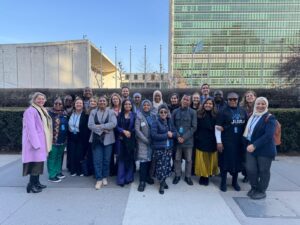
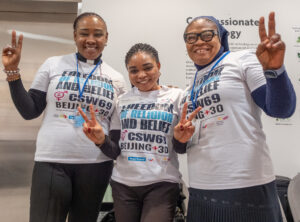
Ruby was one of fifteen women faith leaders from Africa and Asia who travelled with us to the UN as part of the Joint Initiative for Strategic Religious Action (JISRA) delegation for the 69th session of the Commission on the Status of Women (CSW69). Together, we went to show that religion and gender equality are not opposing forces, but powerful allies for peace and justice.
A United Mission
CSW69 took place in a tense global climate. Gender equality gains are being rolled back in some countries, and the voices of women of faith are too often missing from these high-level debates. JISRA wanted to change that.
Our consortium—”Mensen met een Missie, Tearfund, Search for Common Ground, Faith to Action, and the Network for Religious and Traditional Peacemakers”—pooled political contacts, grassroots experience, and resources. By combining networks, we brought together a geographically and religiously diverse delegation, united by a shared mission to advance gender justice and peace.
“The strength of our partnership is that we can do what no single organisation could manage alone,” one coordinator explains. “From navigating visa hurdles to securing high-level speakers and diplomatic support, each partner’s connections opened doors the others couldn’t.”
Leveraging Networks for Local Voices
Months of preparation went into co-designing the programme, selecting delegates, and aligning advocacy messages. JISRA’s partners worked together to secure co-hosting roles with allies such as the United Nations Development Programme, the Dutch Permanent Missions to the UN, and the Somali Mission.
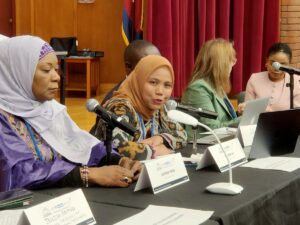
One highlight was a UN side event with the Indonesian government, where diplomats, UN officials, and civil society leaders heard directly from women faith leaders about challenging harmful practices, mediating conflict, and reinterpreting religious texts through a gender-just lens. The room was full, with people queuing outside.
Ruby recalls: “We weren’t asking for permission. We were offering perspective, wisdom, and practice. Our contributions weren’t just welcomed; they were needed.”
“We weren’t asking for permission. We were offering perspective, wisdom, and practice. Our contributions weren’t just welcomed; they were needed.”
Dwi Rubiyanti Kholifah
– “Ruby”
Impact that Lasts
Our joint effort raised the international profile of women faith leaders in a way no single partner could have achieved independently. Our events were praised by UN leadership on social media. Policymakers left with concrete examples of how inclusive religious leadership can dismantle harmful norms from within communities. Work that policy alone cannot achieve.
By projecting their voices on the global stage, these women returned home with stronger legitimacy, new allies, and strategies to tackle issues like gender-based violence, interfaith conflict, and exclusion in decision-making. Each connection made in New York can ripple outward, strengthening the movements they lead and contributing to more just, peaceful societies.
The impact wasn’t only external. The women in our delegation built strong bonds—exchanging tools, stories, and strategies that will spark future cross-country initiatives. One delegate summed it up: “Now I no longer feel alone.”
Why Partnership Matters
This success was possible because of JISRA’s consortium model, driven by a shared vision to amplify the power of voices. By combining networks and advocacy at national and international levels, and working with the Dutch Ministry of Foreign Affairs, we opened doors to global platforms like the UN that too often stay shut for women faith leaders. This approach supported our delegates, ensured balanced representation, and presented a unified message: women of faith must be included in policy-making and peacebuilding.
Working in partnership also means the momentum continues. Consortium partners and delegates are now cooperating to expand the influence and opportunities generated at CSW69, turning international visibility into meaningful local and national change.
Lessons for the Future
We take forward clear lessons from CSW69:
- Diversity inspires trust: A visibly united, multi-faith group drew interest and credibility.
- Shared networks open doors: Combined networks across countries unlocked high-level spaces.
- Follow-up sustains momentum: Ongoing support ensures advocacy becomes action.
Ruby’s words still resonate:
“Women of faith are not obstacles to gender justice. We are its architects. And when we walk together, our path to justice becomes stronger.”
Dwi Rubiyanti Kholifah
– “Ruby”