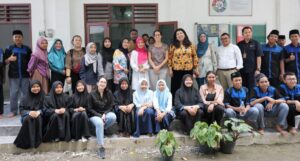


Four countries, three continents—miles apart geographically, but united by a shared ambition. In November 2023, civil society organisations and government officials from Tunisia, Ethiopia, and the Netherlands met in Indonesia to learn from its unique experience. As part of the Right Here Right Now partnership, they explored how Indonesia has successfully integrated sexual and reproductive health and rights (SRHR) into schools—offering a national SRHR curriculum in all junior high schools.
As part of the national curriculum, the SETARA module—developed by YGSI (formerly Rutgers Indonesia)—has reached over 3,500 pupils and supported health and positive sexuality education in three provinces.
Building Buy-In for SRHR Education: Exploring Indonesian Perspectives
How has Indonesia, a country with deep-rooted religious traditions, successfully achieved such broad dissemination of SRHR education, with minimal pushback? Partners from Ethiopia and Tunisia were keen to learn how Indonesian partners have built trust, navigated sensitivities, and secured government and local buy-in.
To obtain firsthand insight, the group journeyed through Jakarta and Jombang, a regency in East Java known for its strong Islamic presence. There, they engaged with government and district officials, academics, religious leaders, teachers from public, religious, and special-needs schools, as well as civil society organisations—including youth- and women-led groups.
Hanna Mulugeta, Ethiopia’s youth country coordinator, noted the many cultural and religious similarities between the countries that created valuable learning opportunities.
“I have been amazed at the effective collaboration of Indonesian partners with local leaders and government officials,” she said. “Throughout our visit, we observed people’s enthusiasm and their belief that the SRHR curriculum significantly enhances the situation for young people.”
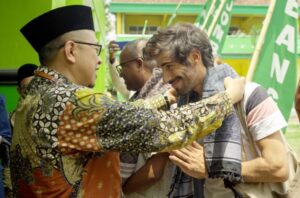
Co-Creation and Local Ownership
Hastin Asih, Country Coordinator of YGSI, explained that the collaboration with local leaders and officials took time. “Eight years ago, we started evaluating norms and values, and the realities of young people in the region. Then we approached policymakers to support them. If they, for example, sought ways to reduce rates of gender-based violence, we showed that comprehensive SRHR education could be instrumental.”
The Right Here Right Now delegation saw how years of careful co-creation and trust-building have helped institutionalise and scale SRHR efforts in Indonesia. SETARA is now supported by local governments and ministries, who are funding its further scale-up.
Lessons for Other Contexts
The exchange fostered connections and allowed participants to reflect on strategies they could apply in their own countries. Berhanu Demissie, Executive Director of the Development Expertise Center and RHRN lead partner in Ethiopia, noted the importance of local stakeholders helping to shape the SRHR curriculum, as this fostered enthusiasm. “The concept of co-creation is particularly interesting for us in Ethiopia, where we seek ways to transition from foreign funding to sustainable national funding opportunities.”
In turn, the Tunisian delegation explored how Indonesian advocacy and community engagement strategies could inspire their own approaches to integrating comprehensive sexuality education, especially in faith-based schools.
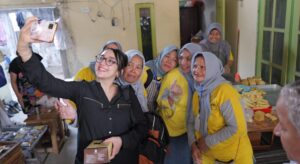
From Inspiration to National Action
This cross-country learning exchange among Global South partners brought together government, civil society, and youth leaders from multiple countries—actors who might not otherwise have had the opportunity to connect.
The trip offered concrete insights into what a comprehensive, contextualised, and government-supported sexuality education rollout can look like and how such efforts can be sustained and scaled. In Indonesia, ministries and local governments continue to expand sexuality education with support from civil society and community leaders.
In Tunisia and Ethiopia, national gender-based violence guidelines offer an entry point to integrate SRHR education. Yet, without strong ties to government, moving forward has been challenging.
“We were very pleased to have technocrats from the Ministry of Education join us,” said Myriam Skhiri, country coordinator for the Tunisian RHRN programme. “Their involvement is crucial in advancing the adoption of SRHR education within government.”
That is why this exchange was so valuable: delegates returned to their home countries with renewed strategies for dialogue, collaboration, and connections.