

When Mohana’s clothing factory received a big order from an international brand, it should have been good news. Instead, it meant weeks of forced overtime in a poorly ventilated workshop. When the brand later cancelled half the order, the factory bore the loss. Wages went unpaid, and Mohana struggled to feed her family.
Stories like hers are common. Across the global garment industry, brands race to fill clothing racks faster and cheaper, but often at the expense of workers and the environment.
Purchasing decisions directly shape wages, safety, and livelihoods on the factory floor. The COVID-19 pandemic only worsened matters, with mass cancellations and non-payments triggering an industry-wide crisis.
For the partners of STITCH—Sustainable Textile Initiative: Together for Change, genuine progress toward a fairer industry is impossible until brands change how they purchase. Easier said than done. Garment value chains are long, complex, and fragmented, making it tricky to unravel what responsible purchasing looks like in practice.
STITCH offered support to the new Responsible Purchasing Practices (RPP) Working Group, a coalition including the Ethical Trading Initiative (ETI), Ethical Trade Norway, Fair Wear, the German Partnership for Sustainable Textiles (PST), Ethical Trade Denmark, the Fair Labor Association and NGO Solidaridad. Together with manufacturers’ representatives in the Sustainable Terms of Trade Initiative (STTI), the RPP Working Group was determined to get to the root of the problem.
“We all felt it was high time for a common language on responsible purchasing practices” – Lisa Süß
Creating a Common Language
For brands to improve, they must know what is expected of them. Here, things had gone off track. Industry players were not aligned, leaving brands with jumbled, even conflicting, guidelines, making it difficult to create lasting progress in their operations. STITCH co-funded the RPP Working Group to help bring clarity.
“We all felt it was high time for a common language on responsible purchasing practices,” explains Fair Wear’s Lisa Süß.
Recognising this, STITCH partners ETI and Fair Wear worked with other members of the RFP Working Group to create practical tools and frameworks to guide brands and suppliers.
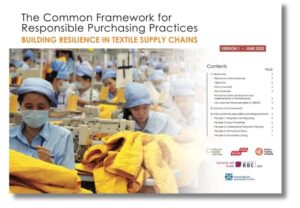
The first milestone came in 2022, with the launch of the Common Framework for Responsible Purchasing Practices. The RPP Working Group drew on diverse expertise, benchmarked existing resources, and engaged with organisations such as the International Labour Organization and Better Buying Institute. Crucially, it captured suppliers’ views through STTI. A public consultation then helped establish five core principles for responsible purchasing: integration and reporting, equal partnership, collaborative planning, fair payment terms, and sustainable costing.